
Most homeowners think of mulch as a finishing touch - something that makes beds look neat and well-maintained. That's true, but it understates what mulch actually does. In North Florida's climate, where summer heat is intense and sandy soil drains quickly, mulch plays a functional role that directly affects how well your plants and lawn perform.
How mulch suppresses weeds
Weed seeds need light to germinate. A layer of mulch blocks that light, preventing most weed seeds from sprouting in the first place. This doesn't eliminate weeds entirely - seeds that blow in and land on top of the mulch can still germinate - but it significantly reduces the number that establish in your beds.
The effectiveness of mulch as a weed suppressant depends on depth. A layer that's too thin - less than 2 inches - doesn't block enough light to make a meaningful difference. A layer that's too thick - more than 4 inches - can create problems of its own, including moisture retention that promotes fungal disease and conditions that prevent water from reaching plant roots. The target range for most beds in North Florida is 2 to 3 inches.
How mulch retains soil moisture
Sandy soil drains quickly - which is one of the defining characteristics of the Crawfordville area. Water moves through it fast, which means plants can dry out more quickly than in areas with heavier clay soils. During North Florida's dry season, this can be a significant problem for plants and lawns that need consistent moisture.
Mulch slows evaporation from the soil surface. By covering the soil, it reduces the amount of moisture that escapes into the air on hot days. Studies on mulched versus unmulched beds consistently show that mulched soil retains significantly more moisture - which translates to less frequent watering and healthier plants.
Temperature moderation
Mulch also moderates soil temperature - keeping it cooler in summer and warmer in winter. In North Florida, the summer benefit is the more significant one. Soil temperatures in unmulched beds can reach levels that stress plant roots during the hottest months. Mulch acts as insulation, keeping the soil beneath it several degrees cooler than exposed soil.
This temperature moderation is particularly valuable for newly planted shrubs and perennials that haven't yet established deep root systems. Cooler soil temperatures reduce stress during the establishment period and improve survival rates.
Soil improvement over time
Organic mulch - wood chips, bark, pine straw - breaks down over time and adds organic matter to the soil. North Florida's sandy soil is naturally low in organic matter, which affects its ability to hold nutrients and moisture. As mulch decomposes, it gradually improves soil structure and fertility.
This is a slow process - it takes years to see significant soil improvement from mulch alone - but it's a meaningful long-term benefit. Beds that have been consistently mulched for several years typically have noticeably better soil than unmulched areas.
"In North Florida's sandy soil, mulch isn't just cosmetic. It's one of the most practical things you can do to reduce watering needs and keep beds looking maintained between visits."
What type of mulch works best in North Florida
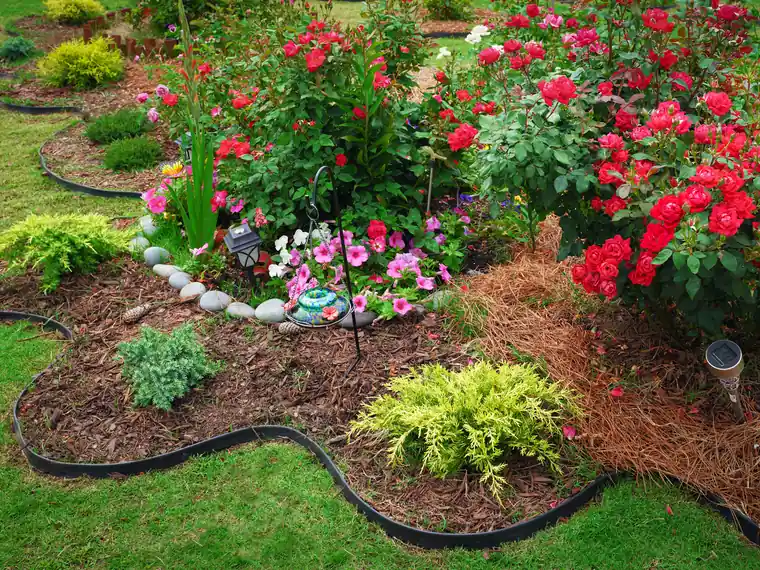
Pine bark and wood chip mulches are the most common choices in this area. Pine straw is also widely used and works well - it's lightweight, easy to apply, and breaks down more slowly than wood-based mulches. Rubber mulch is sometimes used in playgrounds but isn't recommended for garden beds, as it doesn't improve soil and can retain heat rather than moderating it.
The best mulch for your beds depends on the plants, the aesthetic you're going for, and how often you want to refresh it. Our Mulching service includes a recommendation based on your specific beds and conditions. As a Landscaper serving Crawfordville since 2013, we've applied mulch across a wide range of residential and commercial properties in this area and know what performs well here.


