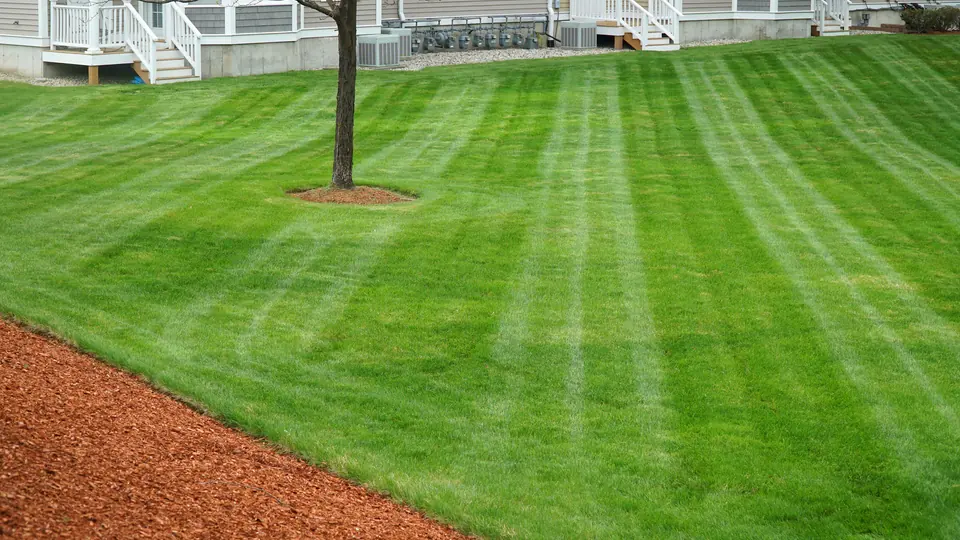
"How often should I mow" is one of the most common questions homeowners ask about lawn care. The honest answer is that it depends - on the grass variety, the season, the growth rate, and how much rain the lawn has received. A fixed weekly schedule works for some lawns during some seasons, but it's not the right approach for every situation.
The growth rate drives the schedule
The right mowing frequency is determined by how fast the grass is growing, not by the calendar. The goal is to mow before the grass exceeds the one-third rule - before it grows more than one-third above its ideal height. If you let it grow beyond that point, you're forced to remove too much at once, which stresses the plant.
In practice, this means mowing frequency changes throughout the year. During North Florida's warm, wet growing season, grass can grow fast enough to require mowing every 5 to 7 days. During the cooler, drier months, the same lawn may only need mowing every 2 to 3 weeks.
Seasonal mowing frequency in North Florida
Spring and early summer are the most active growth periods for warm-season grasses in the Crawfordville area. Warm temperatures, increasing daylight, and seasonal rainfall combine to push growth rates to their peak. During this period, weekly mowing is typically necessary to stay within the one-third rule.
Mid-summer growth rates vary depending on rainfall and heat. During dry spells, grass growth slows significantly - mowing every 10 to 14 days may be sufficient. After significant rain, growth can accelerate again and require more frequent mowing.
Fall and winter mowing
As temperatures drop in late fall, warm-season grasses slow their growth significantly. St. Augustine, Zoysia, and Bermuda all reduce their growth rate as soil temperatures cool. During this period, mowing every 2 to 4 weeks is typically sufficient to keep the lawn looking maintained.
Some homeowners stop mowing entirely during winter, which is generally fine for dormant lawns. However, if the lawn is still showing any growth - which is common in North Florida's mild winters - occasional mowing prevents the grass from becoming too tall and developing thatch.
The problem with fixed schedules
Many lawn care services operate on a fixed weekly schedule regardless of growth rate. During slow growth periods, this means mowing a lawn that doesn't need it - which adds unnecessary wear on the turf and removes clippings that would otherwise decompose and return nutrients to the soil.
During fast growth periods, a fixed weekly schedule may not be frequent enough. If the grass grows significantly between visits, the mowing crew is forced to remove more than one-third of the blade - which stresses the lawn even if the visit is technically "on schedule."
"The best mowing schedule is one that responds to how the lawn is actually growing - not one that's set in advance and never adjusted. In North Florida, that means mowing more often in spring and less often in winter."
Grass variety and mowing frequency
Different grass varieties grow at different rates, which affects how often they need to be mowed. Bermuda grass grows faster than St. Augustine during the peak growing season and typically requires more frequent mowing to stay at its recommended height. Zoysia grows more slowly than both and generally requires less frequent mowing.
If you're not sure how often your specific lawn needs to be mowed, the simplest approach is to check the height before each scheduled visit. If the grass is within the recommended range, it doesn't need to be mowed yet. If it's approaching the upper limit of the one-third rule, it's time.
Professional mowing schedules
Our Lawn Mowing service adjusts frequency based on the season and the actual growth rate of each lawn. We don't apply a one-size-fits-all schedule - we mow when the lawn needs it. As a Landscaper serving Crawfordville since 2013, we've developed a good sense of how different grass varieties grow through North Florida's seasons and what each lawn actually needs.